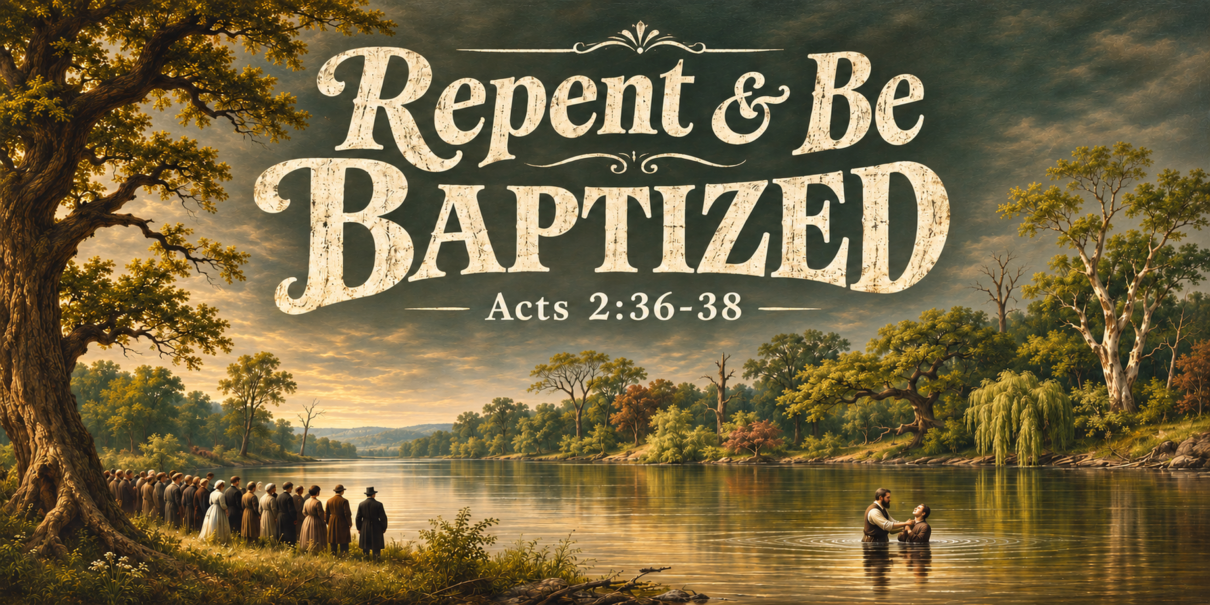
Many of us are here because someone we love is being baptized. Whether it’s your son, daughter, or a friend you want to support them. Rituals are important historical markers that shape who we are. They help us remember where we came from and live out the commitments that guide who we’re becoming. Weddings, birthdays, holidays, and funerals, all say something about our identity and our place in our family. Which is why often take photos of special occasions. They remind us of who we are. And some traditions remind us that our family is part of a story that goes back generations.
Seven weeks after the crucifixion of Jesus Jewish pilgrims migrated from all over the world for a religious festival. It was a special time of remembering the traditions that were passed down to them from parents and grandparents. It was a time to remember that wherever they called home they belonged to the people of Israel. The stories they grew up hearing were part of their story too. In the morning Jesus’ followers were gathered in an upper room when a sound like a strong wind filled the room. The noise draws a crowd outside. As the people gathered the apostles went outside and began sharing the good news about Jesus in languages they had not previously learned. The gathered crowd is astonished and cannot explain what is happening; some excused them of being drunk. The apostle Peter stood up and began explaining what God was doing at that very moment.
He quotes the Bible and reminds them of the many promises God made to their people centuries ago. God would send them a ruler, a Messiah who would deliver them from their broken relationship with God. Jesus is the Messiah and it was proven by His many undeniable miracles. And yet they foolishly handed Him over to be mocked, beaten, and nailed to a cross like a con artist. But they were wrong and God raised Jesus from the dead three days later, just like Jesus said. Death could not keep Him down. Each step in Peter’s sermon is bringing them closer to the only logical conclusion. If God raised the man they rejected, what does that make Jesus, and what does it make them? Then he concludes:
Acts 2:36 NASB "Therefore let all the house of Israel know for certain that God has made Him both Lord and Christ--this Jesus whom you crucified."
You crucified the very one who had come to save you. You treated God’s Son like a worthless piece of trash. And yet by His resurrection God has announced that He is nonetheless, still both “Lord and Christ.” Oops; can you imagine how foolish they must’ve felt in the moment? You thought you got rid of Him but He isn’t going away anytime soon.
But how can the guy who was defeated be the hero? Crucifixion was a humiliating display of how weak someone was. Are not warriors and heroes supposed to defeat their enemies, not be killed by them? What they didn’t know was that God was working behind the scenes. Through their blinding stubborn pride, He orchestrated the greatest victory ever accomplished for mankind. The death of Jesus made it possible for all of humankind to be forgiven by God for our blatant disrespect towards His goodness and right to rule over us. Jesus’ death and resurrection rescues us from the worst punishment we could ever receive; eternal damnation.
The cross doesn’t mesh very well with our assumptions about what strength and power should look like. But neither does it mean that God has decided that sin no longer matter. Christ takes the judgment His people deserve so that we can be forgiven without pretending our guilt is insignificant. And the Lord who will judge the world is the same Lord who gave His life to save sinners. But His authority does not wait for our vote of approval.
Jesus has authority whether we accept it or not.
“This Jesus whom you crucified, God has made Him both Lord and Christ.” When evaluating the decisions that our society makes, people will sometimes remark that they don’t want to be on the wrong side of history. The enslavement of people based on the color of their skin was clearly wrong and yet our ancestors still practiced it. History has proven they were on the wrong side of the issue. But have you ever considered whose side you will be on when God judges the world at the end of history? Jesus Christ has been the most influential and famous person for 2000 years. Whether we recognize His authority or not He isn’t going away.
The crowd that Peter was speaking to felt like Jesus threatened their familiar way of life. He challenged many of their traditions and religious heritage. We can feel the same way whether we grew up in church or have hardly been inside one. We don’t outright reject Jesus; we want a Jesus to who we can pray when the test results are not good. But we put Him on mute when life returns to normal. We want Jesus available for those moments when we feel like we lost our direction. But we don’t want Him calling out the choices and behaviors we don’t want to let go.
He has authority over your life whether you grant it to Him or not. He is simply giving the freedom to show whether you really love Him or just love His blessings. Many of us want God to improve the parts of our life that give us trouble but when He makes us uncomfortable we ghost Him. You are saying “I want you to listen when I speak, but I don’t have to listen when you speak.” Typically, we call people like that, users. Think about a friend who only calls you whenever they need something. Your glad to help, but don’t hear from them again until they need something else. What hurts is not so much that they asked for help, but that this all they wanted from you. They obviously don’t really love you; they only love what you can do for them.
Jesus said that the greatest commandment God has ever given is to “love the LORD your God with all your heart and with all your soul and with all your might” (Matthew 22:37). Asking God to help us is part of the way we honor Him. But asking Him to act on your behalf while despising His commands dishonors Him. If He is Lord, then His authority reaches your work, home, and deepest loyalties. If you love Him You will gladly submit to His authority.
What does your attitude say about your deepest opinions of Him? We can call Him “Lord” when we need help but functionally treat Him like a meal-ticket. Like a husband calling a woman his wife but she really functions like a maid. Or a wife calling a man her husband but he really functions like a paycheck. The Bible calls that lip-service. What does your attitude really say about what you think about Jesus? “This Jesus whom you crucified, God has made Him both Lord and Christ.” If Jesus is both Christ and Lord what does that say about what we owe Him? If he has given you breathe you have every reason in the world to love Him with all your heart. If He has provided for all your needs even when you use Him doesn’t He deserve your loyalty all the more?
How offensive our neglect must look from the perspective of those in Heaven. They who see everything God has done and is doing for us and how little gratitude we give to Him. They who see how great of a danger we are in of God judgment and all He has done to spare us. How slanderous it must appear to despise the riches of His grace and treat God’s Son who died for us as worth little more than a passing head nod. How would you feel if someone grievously disrespected your son or daughter? No good parent would passively sit quietly while the person you helped spit on your kid.
God is patient with us, but don’t mistake His patience with you as apathy. It is a crime against the glory of God to disrespect Christ’s authority and we will all be judged for it one day. Which is why Christ died for you; you are in danger of God’s judgment. And it is not the type of judgment where you get a slap on the hand. It is a severe judgment, like that of a father getting vengeance on the person who killed His Son.
Hebrews 10:29-31 NASB How much severer punishment do you think he will deserve who has trampled under foot the Son of God, and has regarded as unclean the blood of the covenant by which he was sanctified, and has insulted the Spirit of grace?
I am not trying to be dramatic; I am simply presenting what God says in Scripture. A severe punishment is coming for all who disregard Christ “as unclean” or unworthy of our submission. It is an insult to the Holy Spirit to resist the work He is trying to do in your heart right now. It is like trampling on the Son of God. Other Scriptures describe the punishment as eternal torment (Matt. 25:46) inside a lake fire (Rev. 20:15). It sounds so severe that many people have difficulty accepting it as proportionate. Isn’t God a God of love? He is the most loving being in existence; consider how patient He has already been towards you. But love and hate are not necessarily opposite emotions. God’s hates everything that comes against that which He loves. Doesn’t your love for your family lead you to hate anything that causes them unjust misery?
Hebrews 10:30-31 NASB For we know Him who said, "VENGEANCE IS MINE, I WILL REPAY." And again, "THE LORD WILL JUDGE HIS PEOPLE." 31 It is a terrifying thing to fall into the hands of the living God.
If this is true it should scare the hell of out every single one of us. What danger do the deceased see hanging over each one of us right now? They see the holiness of God far more clearly than we do. Jesus tells the story of a man in hell being in such torment that he begs Abraham to send another dead man, Lazarus, to warn his brothers. God’s judgment is terrifying and irreversible My friends, God is not ignoring our disregard for Christ. He is storing up His wrath for the final judgment when He will “judge the living and the dead” (1 Peter 4:5). The man they crucified is the very One God has made both Lord and Christ.
Acts 2:37 NASB Now when they heard this, they were pierced to the heart, and said to Peter and the rest of the apostles, "Brethren, what shall we do?"
They cannot defend their treatment of Jesus, and neither can you or I. Isn’t it interesting how easily we can deceive ourselves when we don’t want to face the facts? When the truth hurts we have a lot of explanations and answers to it. We are masters at minimizing our guilt, playing the victim, and comparing ourselves to someone worst. If none of that works we put the messenger on trial. I have no doubt that you’ve been victimized; but you’ve also been the perpetrator. I have doubt that there are people worst than you. But there are also people way better, and Christ is the perfect standard by which we will be judged. You will never be ready to follow Christ so long as you keep defending yourself every time His truth pierces your heart.
When facing the truth about Jesus we are left without a defense.
The conviction of the Holy Spirit is not an emotionally engineered reaction to a moving story. Notice that the crowd understood their sin to primarily be their rejection of Christ’s salvation and lordship. It is possible to regret the consequences of our sin without grieving the way our sin has grieved God. Someone can regret the impact their drinking has had upon their family while defending their right to keep drinking. We might regret being get in a lie while still believing our dishonesty was necessary. We want relief from our consequences but would prefer not have Christ as Lord. The crowd asks “What shall we do?”
Acts 2:38 NASB Peter said to them, "Repent, and each of you be baptized in the name of Jesus Christ for the forgiveness of your sins; and you will receive the gift of the Holy Spirit.
To repent means to turn. It is more than admitting you have made mistakes. It is a change in how you think about your sin and how you think about Jesus. The heart that used to despise submitting to Christ begins to actually want to submit to Him. It is the difference between going to work only to earn a paycheck versus going to work because I love me job. Repentance is not only a sorrow over our sin but a new allegiance to Christ, even while still struggling to submit to Him. It is a fundamental change in our attitude towards Christ.
Peter also instructs each of them to be baptized in the name of Jesus Christ. The word “baptized” means to be “immersed”, i.e. to be fully emerged underneath the water. The Bible presents your baptism as evidence that your sins have been truly forgiven. By being baptized you are declaring that you are an unworthy sinner who has received God’s forgiveness. The act of standing in the water pictures the believers former life of sin. Thus, it is humbling because I am admitting how wrongheaded my attitude towards God use to be. The act of going under the water pictures their new identity with the death of Christ. The act of coming out of the water pictures their new identity with the resurrection of Christ. It is ultimately a picture of your new identity in Christ.
Notice, that in Peter’s formulation, repentance comes before baptism. This is why we do not baptize infants at VH. I know firsthand that infants can be a sinful terror to their parents; but they don’t understand their need to repent. They don’t understand what Christ has done for their sin. Everyone in the Bible who is baptized is someone who repented. No where in Scripture is there a reference to infants being baptized. On the contrary, in churches throughout history there have been millions of baptized non-Christians.
Jesus calls the guilty to receive His forgiveness and Holy Spirit.
The people Peter is speaking to cannot undo what they have already done. And yet he offers them forgiveness in the name the very Jesus they rejected. They don’t have to prove they can change before they come Christ. The need to receive “the forgiveness of sins.” Then they will be given “the gift of the Holy Spirit.” The order is important. Christians sometimes wonder if they have really been forgiven of theirs sins because they still struggle with it. They have conflicting desires; desires the want to obey God and yet old habits that don’t die easily. The Holy Spirit gives you a desire to obey Christ that you could never muster up yourself. But the new desire doesn’t automatically make the old ones disappear. A boat can drift downstream so quietly that no one notices the current. But once the motor starts and the boat pushes back you can see the water pushing against it. The current of the river doesn’t change but the boat now has power to push back.
The Holy Spirit gives you the power to change by giving you a real love for Christ that wants to please Him. The struggle to obey Christ can be evidence that His Spirit is at work in you. You don’t have to prove you can change before Christ will forgive you. The same Lord who forgives you gives you His Spirit so you don’t have to learn to obey Him on your own.